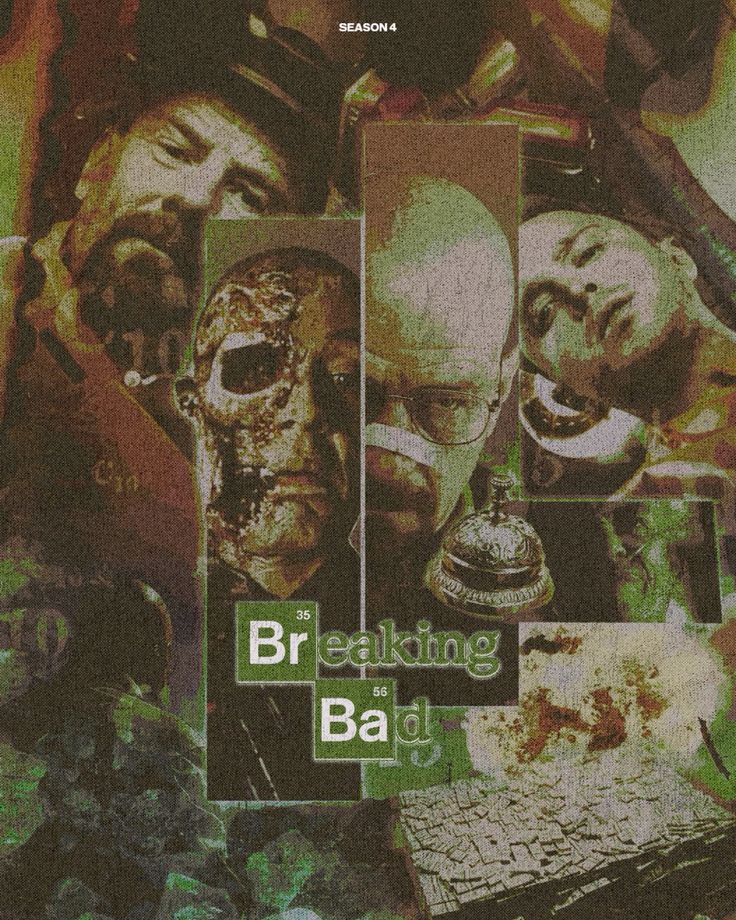
I have no proof but also no doubt that everyone has seen something related with “Breaking Bad” at some point in their lives. If for any reason you don’t know it, “Breaking Bad” tells us about Walter H. White, an unappreciated genius who worked as a high school chemistry teacher, earning minimum wage for his family. He is diagnosed with lung cancer, and with the misfortunes in his life, he decides to sell methamphetamine using his knowledge in chemistry to provide for his family. But little by little, he transforms into a being entirely unlike the gentle, timid family man he used to be; he becomes the notorious drug lord Heisenberg.
The Initiation
The creator Vince Gilligan came up with the concept during a conservation with a friend. They were joking about how hard it is to make money, and someone said something about making meth in a RV. The joke spawned a thought in Gilligan’s mind: what if a normal person gradually becomes a criminal?
Gilligan had previously worked on “The X-Files”, where he loved exploring moral gray areas. With “Breaking Bad”, he wanted to push that idea further, transforming a harmless, underappreciated high school teacher into a dangerous drug kingpin. When Gilligan pitched the show, many networks were not that sure because the protagonist becomes a criminal, which was risky at the time. Eventually, AMC took the chance.
Influence on Pop Culture
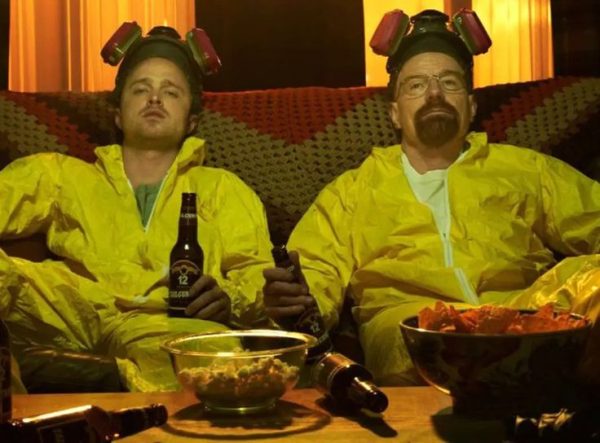
A series of such magnitude was obviously destined to be immensely popular and highly influential. During its original run, it was one of the most-watched shows on television and—given that the internet was experiencing a major boom at the time—various images, clips, and opinions regarding the series soon began to circulate online.
In fact, its impact was so profound that, in my own experience, I encountered many people who were familiar with characters such as Walter White or Jesse Pinkman—and even recognized a specific line from the series featuring Gustavo Fring as he introduced his restaurant chain, “Los Pollos Hermano” (A farce involving one of the largest drug empires in the United States). Also, there are iconic phrases from the characters like “Say my name” from Walter White or the number of memes that Jesse Pinkman has.
Also, this series gave Albuquerque, a real city and where the show takes place, a lot of popularity. I have seen many persons going to Alburquerque to see the White’s house and the local Los Pollos Hermanos; those spots give tribute to the whole series and its spin-off “Better Call Saul”.
I also realize how many parodies and references “Breaking Bad” has. It is regularly parodied, featuring in shows like “The Simpsons”, “Family Guy” or “The Office”. I was surprised how all my life I was seeing references everywhere and did not realize it.
Character Psychology & Development
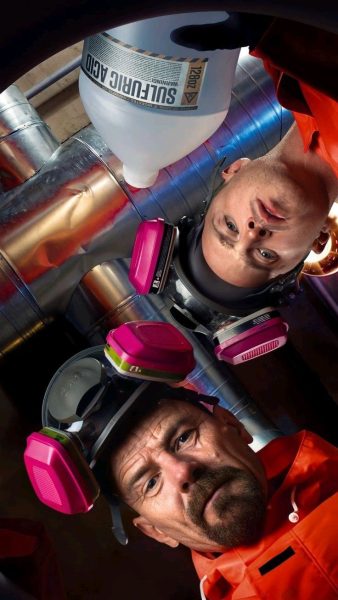
One of the reasons it became so popular is because of how the show focused on how people can slowly change
for different motives. Walter White starts as quiet, frustrated and invisible to success. He believed life cheated him—especially after leaving a company he had cofounded and made his partner a millionaire over time. After Walter got cancer and started cooking methamphetamine, he always told himself it is for his family, but as I was watching the show, that statement is less clear. He starts to justify his murders and the use of manipulative methods on people.
In a certain point Walter could leave the business and live a normal life again, but he refused. He wanted to build a meth empire with his knowledge and try to fill the void left by losing a company that became a multi-million dollar enterprise, and he was still saying that “Is for my family”. Many people say that Walter White turns into Heisenberg after all the events he went through, but I believe Heisenberg (his alter ego) was always there, but it simply didn’t know how to show up.
Jesse Pinkman is the opposite. He begins as immature and reckless. As the shows progress, he becomes Walter’s partner in the business, but every action he commits he increasingly gets emotional guilt, even at the point where he gets depressed. Many times in the series he shows kindness, like helping a little kid from an abusive family. But he just gets worse and worse, and Walter just plays with him like he is some kind of toy. Even when Jesse was no longer on his side, Walter tried to kill him because he could ruin his empire. Finally, at the end of the series, Jesse is finally free from this world, beginning a new life with a new identity but losing a lot on the path behind.
It’s Amazing Writing and Plot:
One reason for me that the plot feels so satisfying is that actions always have consequences. Small decisions early in the series later create a huge problem. For example, Walter choosing to cook meth leads to lies, the lies damage his family, the family tension affects his decisions, and those decision end up in tragedy.
One of my favorite plot twists is how in Season 2, we can see at the start of some episodes scenes in black and white with a pink teddy bear. At the start, I was confused, but in the season’s ending I saw how Walter’s actions of letting Jane (Jesse’s girlfriend at the time) die leads to a horrible experience for Jane’s father who is giving directions to planes. He cannot focus, giving wrong directions to a plane, leading to a crash that killed 167 innocent people. Just because Jane was influencing Jesse in leaving the business, Walter let her die just to keep his partner.
The Legacy Left Behind
The writing, the popularity of the characters, and its impact on social media let to an amazing legacy followed by its spin-off “Better Call Saul”, centered around Saul Goodman, the eccentric lawyer originally introduced comic relief. What surprised audiences was that the spin-off became more than a side story.
It explored Saul’s tragic transformation from Jimmy McGill, an ambitious but flawed lawyer, into the morally corrupt Saul Goodman. Many critics praised the series for its deep character writing, emotional storytelling, and slow-building tension, with some even arguing it rivaled or surpassed “Breaking Bad” in quality.
Together, both shows left a massive mark on television history. They proved that TV audiences would embrace slower, character-driven storytelling if the writing was strong enough. Their cinematic visuals, attention to detail, symbolism, and long-term character development influenced countless modern dramas. Today, many television creators still cite “Breaking Bad” and “Better Call Saul” as major inspirations because they changed the standard for what television storytelling could achieve.