Many people believe that dreams can reveal what we are feeling deep down, even
when we don’t realize it while we’re awake. According to the article titled “Anxiety
Dreams: Why We Have Them and How To Stop Them” published by Cleveland Clinic,
when we are stressed, anxious, or overwhelmed, those emotions can show up in our
sleep as confusing or intense dreams. For example, someone who is nervous about a
test might dream about being unprepared or lost, because their brain is trying to make
sense of that pressure.
Even happy feelings can appear in dreams, like seeing a person you care about or
reliving a fun moment. Psychologists say that dreams may act like a “release valve” for
our brains, helping us process emotions we don’t know how to handle during the day.
So while not every dream has a deep meaning, many can be a reflection of our mental
and emotional state.
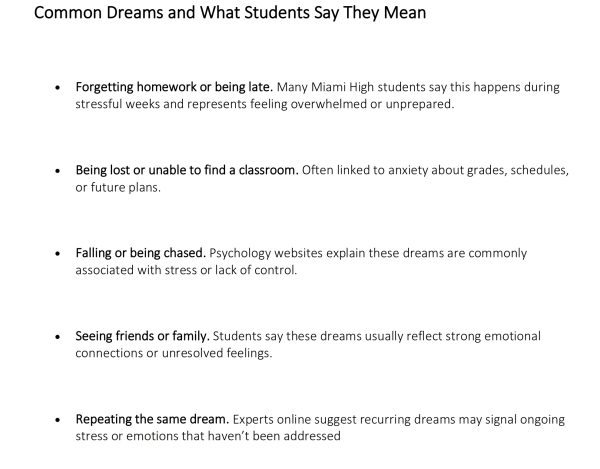
Many Miami High students say they have experienced this connection between
dreams and real life firsthand. Senior Isaac Gonzalez shared that during stressful weeks,
his dreams become more chaotic. “Whenever I’m really overwhelmed with school, I
have dreams where I’m late to class or forgot to study,” he said.
Other students described similar experiences, especially around exam season or
major life changes. These patterns suggest that stress and pressure often find a way into
our dreams, even when we try to ignore them while awake.
According to online sources from The National Sleep Foundation’s “What is REM
sleep?” and UCLA Health’s “The importance of dreaming while sleeping”, dreams are
most vivid during REM sleep, when the brain is highly active. During this stage, the brain
organizes memories and emotions from the day.
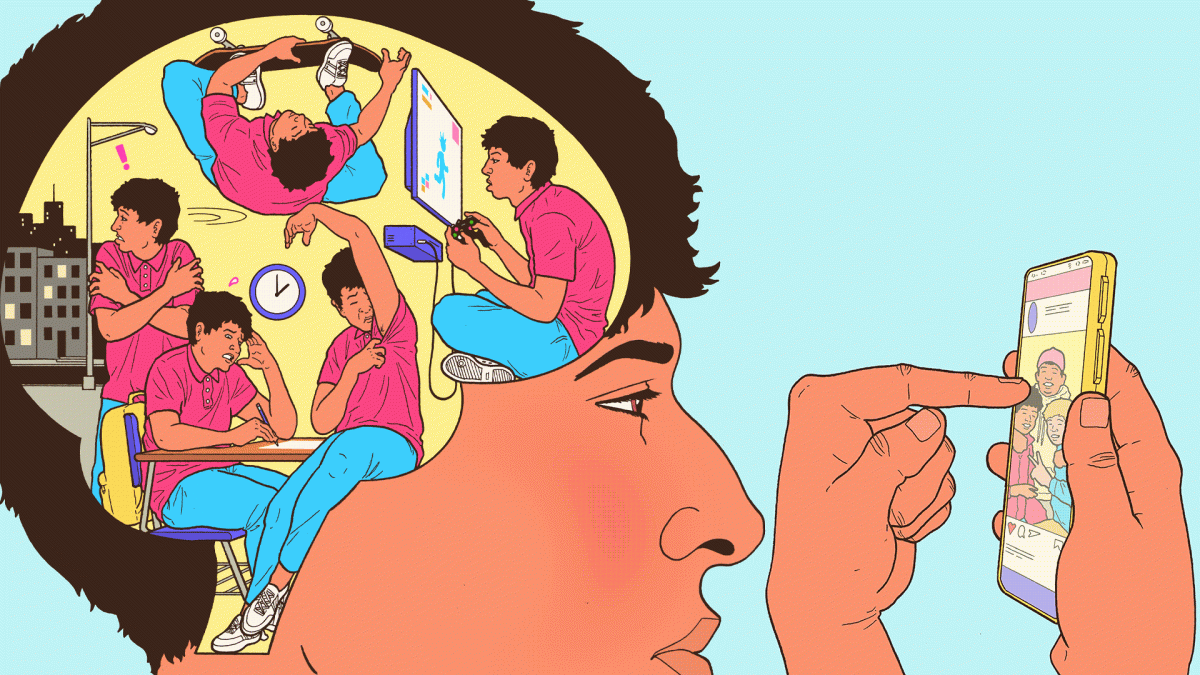
This could explain why dreams often replay situations that made us emotional,
whether they were stressful, exciting, or confusing. Researchers also note that dreams
do not always show emotions in a literal way. Instead, feelings may appear as symbols,
such as falling, being chased, or getting lost.
Several Miami High students shared that recurring dreams helped them recognize
stress they were not fully aware of. Junior Ronin Rene said, “When I keep having dreams
about being late or overwhelmed, it usually means I’m more stressed than I realize.”
Another student, senior Ian Edmondson, mentioned that after noticing the same dream
repeating, he realized he needed to slow down and focus on his mental health. “It made
me step back and think about how much pressure I was putting on myself,” he said.
Psychologists say there is no scientific proof that dreams predict events. Instead, they
may influence decisions by making people reflect on their emotions or worries more
deeply. Senior Ocean Caberrera said, “I don’t really think dreams tell the future, but
sometimes they influence how I feel the next day.” Freshmen David Zuniga shared that
stressful dreams make him feel more anxious the following day. “If I dream about failing
something, it stays in my head all day,” he said.
Meanwhile, senior Ricardo Valdivia explained that positive dreams can have the
opposite effect, saying they make him feel calmer and more confident. These responses
show that even if dreams do not predict the future, they can still impact how students
think, feel, and act.
Even though dreams are still not fully understood, many people agree that they can
reveal important things about how we are feeling. Whether it is stress, excitement, or
fear, dreams often mirror emotions we experience in daily life. By paying attention to
recurring dreams or themes, students may gain insight into their mental and emotional
health. In the end, dreams may not always have a clear meaning, but they can still tell a
powerful story about what is going on inside our minds