A Walk Across the Sun is a novel set in India that follows two young sisters, Ahalya and Sita, whose lives are shattered after a tragic accident. They are separated and forced into different forms of exploitation, struggling to survive and holding on to the last bit of hope they have, that they’ll find each other again soon. Unfortunately, this isn’t just the case for Ahalya and Sita. This is the reality of many people around the world who are taken advantage of and sold into human trafficking.
WHAT IS HUMAN TRAFFICKING?
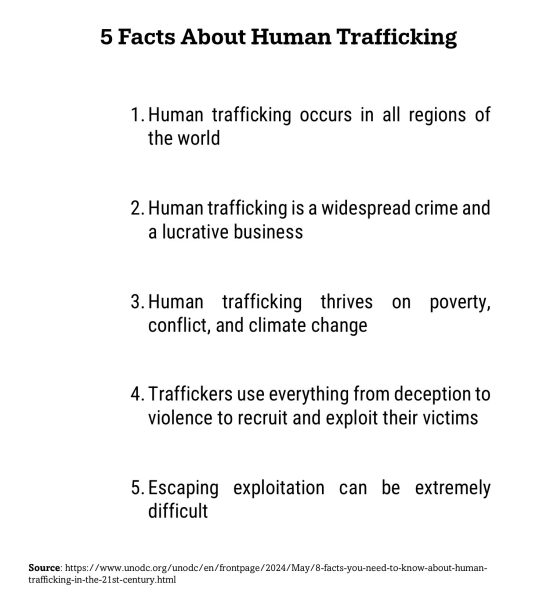
According to an article titled “Human Trafficking” uploaded on the United Nations Office on Drugs and Crime website, human trafficking is the recruitment, transportation, transfer, harboring, or receipt of people through force, fraud, or deception, with the aim of exploiting them for profit.
Because human trafficking is a crime done so discreetly, it is difficult to determine or give an exact number of victims. However, estimates suggest that about 27.6 million people are forced into labor trafficking at any given time worldwide, with broader estimates showing that nearly 50 million people are living in modern slavery (including forced marriage).
HOW DOES TEACHING OTHERS ABOUT IT HELP?
Most parents around the world might not think to sit down and have a conversation about human trafficking with their child/children because it is not something that has affected or happened to them personally. However, when a person is well informed about the dangers and severity of human trafficking, they are less likely to be affected by it and live their life more safely.
Luisa Becerra, a sophomore, says, “Having lived in a house that’s mostly full of women my whole life, the women around me have always talked to me and warned me about human trafficking, especially since I go to school and come back alone without any supervision. It is something that could happen to anybody all around the world, not just here in the U.S. I also make sure that I am always sharing my location with my family and friends so that they know where I am in case of an emergency.”
HOW DO MOST PEOPLE LEARN ABOUT IT?
When you think about the first time you ever heard about something related to human trafficking, it was probably a kidnapping case when you were younger of a child just around your age at the time, or maybe even the missing children on the side of your milk carton. Ms. Guerra, an ELA teacher here at Miami High, says, “Human trafficking has always been a thing I’ve known about growing up. For me it was probably an evolution of kidnapping and then fully understanding the concept once I got older.”
HOW TO STAY SAFE?
Being alone in public often carries a heavy sense of vulnerability and danger for most women. When asked how to make herself feel safer in public Ms. Bravo, an environmental science teacher at Miami High, responds, “I am always aware of the things around me. I try to recognize the nearest exit around me and try not to be too distracted especially by noise cancelling headphones.”
HOW OFTEN DO YOU HEAR ABOUT IT?
How often do you hear about human trafficking? Maybe a couple times a month, on the news, or a post on social media that crosses your mind a couple times before it quickly goes away again. To you, it might just be another sad story that makes you feel bad for a few moments until you move on with your day, but for the people who are in desperate search of this victim, it’s a thought that they can’t ever get rid of. Something that is constantly lingering in the back of their mind no matter what they are doing. This is exactly why this matter deserves so much more attention than it is receiving right now.
Human trafficking rates are growing rapidly every single day and the more we sit back and let it happen, the easier it becomes for the people controlling it. Victoria Suarez, a sophomore, says, “To bring more awareness to this kind of thing, I think people should speak up about it more, be more aware of the dangers it can bring to their lives and the people around them, and inform others about it so that they can know too.”
HOW TO HELP?
Human trafficking is a silent crisis that is not getting the attention it truly needs. These victims are in desperate need of our help and of a system that can help them receive the justice they deserve. The next time you see a missing person’s poster, stop and take a moment to realize the severity of it all, how much the person’s family must miss them, and what kind of predicament the person might be in. If you see something, say something. You never know whose life you might be saving.