According to an article titled “Artificial Intelligence Revolution in Education: What You Need to Know,” published on the website for the World Bank Group <https://www.worldbank.org/en/news/video/2025/08/19/ai-revolution-in-education?utm_source=chatgpt.com>, “The Artificial Intelligence revolution is transforming education at an unprecedented pace, offering innovative opportunities to personalize learning experiences, support teachers and students in their daily tasks, and optimize educational management.”
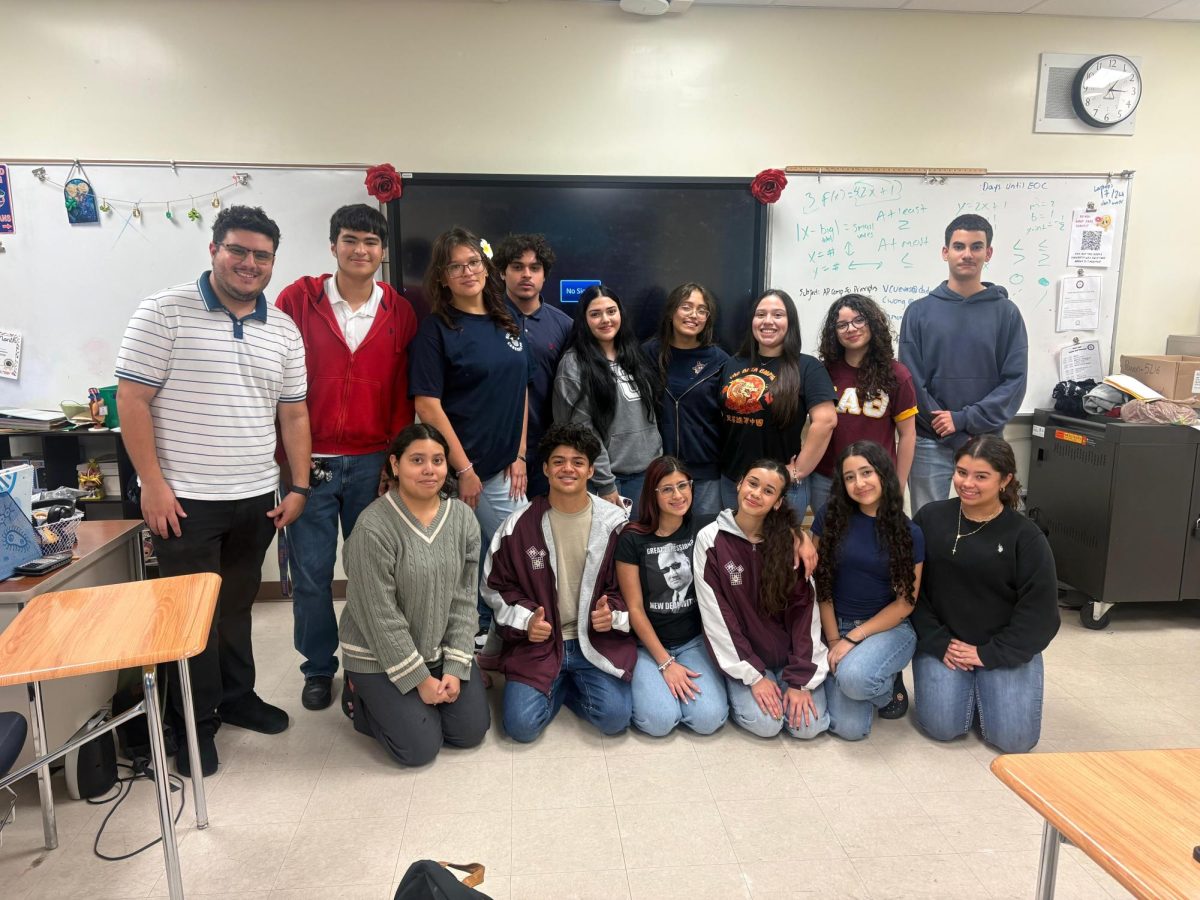
AI has also changed the way many students study or complete assignments in several helpful ways. For example, junior Allison Romero said, “It helps me study for tests and mini quizzes and makes assignments easier to understand.” Also, junior Montserrat Cerrato shared, “It makes studying faster and helps me understand the work more quickly.”
On the other hand, students expressed strong concerns about whether relying on AI affects critical thinking. Junior Osmel Diaz explained, “Yes, I think AI becomes a tool of reliance and causes us to bring all of our problems to it, which in turn doesn’t let us deal with our own problems, which most definitely harms critical thinking. Using AI for learning makes us depend on AI more than our brains, and if we go down that path, eventually everyone will be relying on AI, and we won’t have any true critical thinkers to pave ways for us.”
Senior Triana Suarez shared a similar thought, stating, “Yes, AI affects our critical thinking because we know it has all the answers. This can make us feel like we don’t need to think deeply or put in as much effort when doing our work.”
Students described several benefits they have experienced when using AI for learning. Junior Cristian Duarte explained, “It can break down a question to a level where you can analyze it, or it could give you the full answer with the step-by-step process, and from there you just have to simply look at the response and follow it until you understand the question.”
Junior Brianna Sobalvarro said, “AI goes into depth of more information that you already have. And I benefit from that and not just that. If I do not really know a topic, it breaks the topic into mini topics, which is such a better way.”
AI can support different learning needs, with Allison Romero saying, “It can explain things in different ways and at different speeds for all kinds of learners.”
Students shared several ways they believe AI could make learning more accessible for different types of learners. Junior Camila Cuba explained, “It can explain things in different ways for different learning styles.”
Montserrat Cerrato added that AI can adapt to each student’s level of understanding, saying, “It can help you learn things in any level and ways you can understand.”
When students were asked what features they would include if they could design their own AI learning tool, their ideas focused on personalization and support. Brianna Sobalvarro shared, “Maybe a tool to breakdown mini lessons, and if not, make mini programs that have lessons into it, and people can customize to their best capabilities for them to study.”
Junior Russell Reyes described a tool focused on building understanding, explaining, “My AI tool would ask students questions to check understanding. It would give hints instead of full answers so students can think more. It would also create personalized practice activities for each student.”

https://www.geeksforgeeks.org/blogs/6-ways-artificial-intelligence-will-change-education-in-the-2020s/