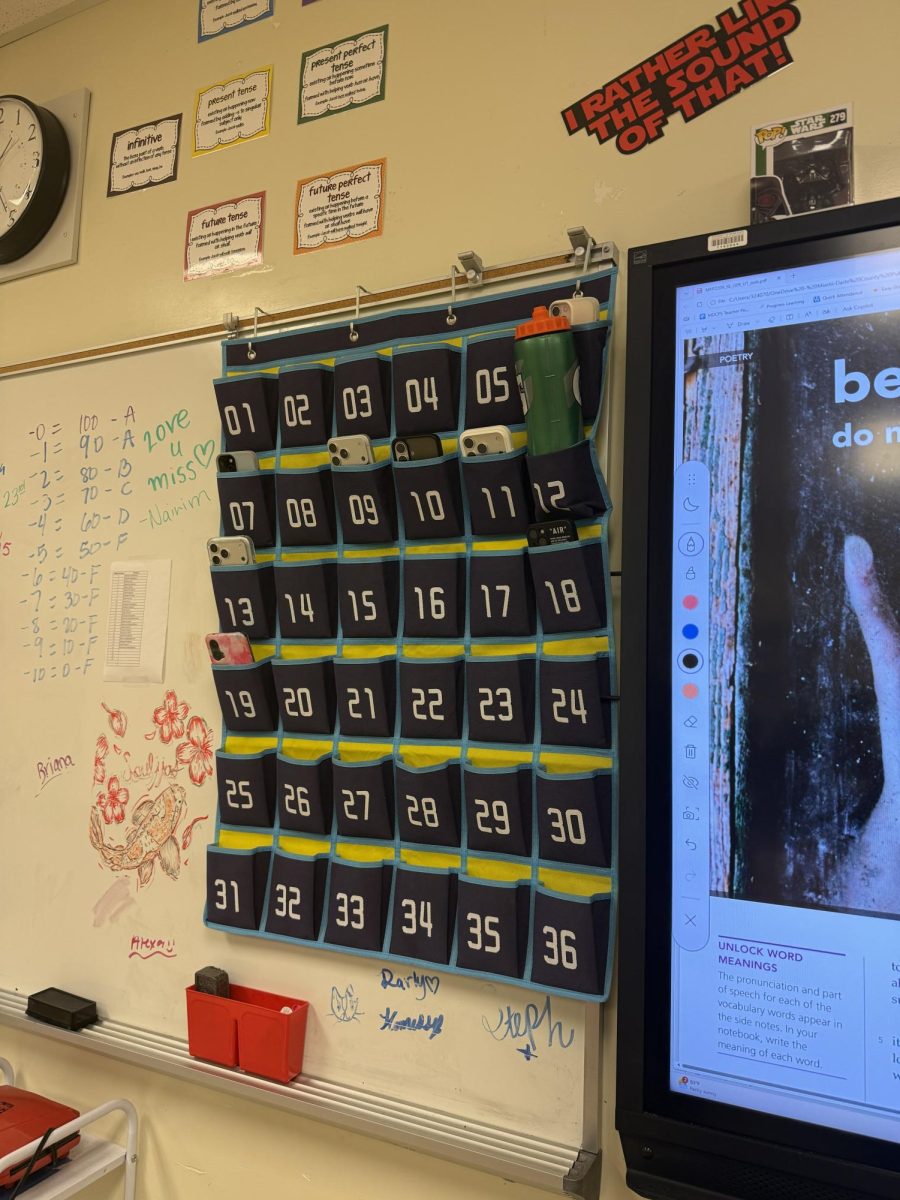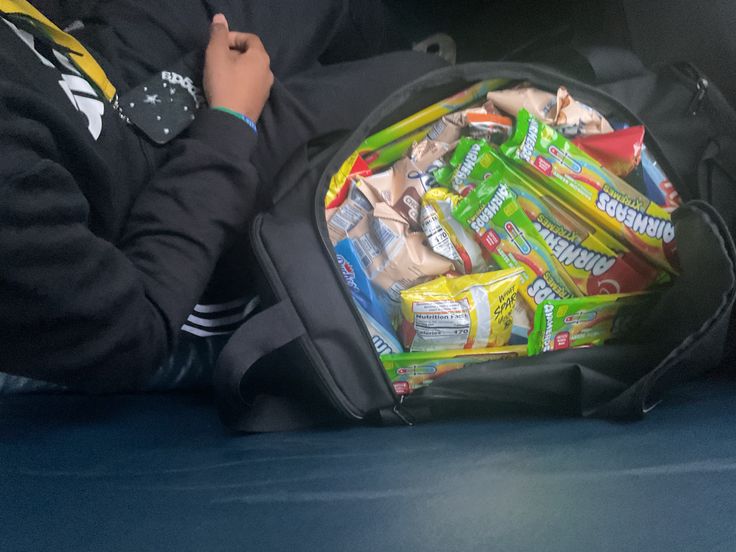
Between classes, during lunch, and sometimes even after the bell, a quiet economy operates throughout Miami High. Snacks move from backpacks to desks, large portions of home baked M&M cookies are exchanged near stairwells, and small transactions happen quickly before the next period begins. While rarely acknowledged officially, this student-run marketplace has become a familiar part of everyday school life.
Unlike traditional businesses, this underground economy relies on word of mouth rather than advertisements. Students learn who sells what through friends, group chats, and reputation. Transactions typically happen during lunch or passing periods, when hunger is high.
The Marketplace
Student sellers operate in moments when students cannot leave school but still want food. Because leaving school during school hours is not allowed, students say convenience plays a major role in why the marketplace continues to grow. The most common items sold are chips, drinks, Rice Krispies, brownies, and other homemade or prepackaged snacks. These products are simple, affordable, and easy to carry. For many students, the appeal comes down to reliability and taste.
Gabriel Sanchez, a Miami High senior, said he purchases snacks primarily out of hunger and convenience. “Mostly because of hunger,” Sanchez said. “I usually don’t eat the day prior, so because of that hunger, I’m forced to buy something.” He explained that buying from students is easier than relying on other options. “It’s a lot more convenient, especially during school hours,” he said. “They don’t really allow you to go out. Having someone that sells to you in school is a lot more convenient.”
Sanchez added that reputation plays a major role in which sellers can be trusted. “If everyone recommends them, that builds trustworthiness,” he said. “Unless I know them and their values, I wouldn’t really buy from someone new.” When asked whether stricter enforcement would stop him from purchasing snacks, Sanchez said, “No, because at the end of the day, the school lunch really isn’t that nutritional. Buying snacks isn’t harmful.”
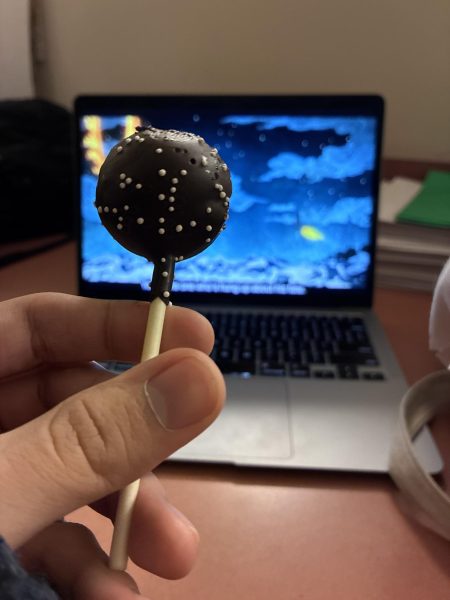
Fabiana Redondo, another Miami High senior, also purchases snacks, but for different reasons. “I’m just trying to help them,” Redondo said. “They’re saving up for something, and they’re my friends.” Redondo said she buys from student sellers about twice a week. For her, trust is personal. “She’s really nice,” Redondo said of one seller. “She asks you nicely if you want to buy anything. She just looks nice.”
Unlike Sanchez, however, Redondo said stricter enforcement would influence her decision. “I think I would stop because I don’t want to get into trouble,” she said. When comparing student sellers to the cafeteria, Redondo emphasized convenience. “They’re really close to you,” she said. “You text them and they answer quickly. It’s convenient.”
School Policy and Perspective
While many students see the underground economy as harmless, teachers acknowledge a more complex reality. Mr. Aguado, a math teacher at Miami High, expressed mixed feelings about it. “It’s against the rules for the school,” Mr. Aguado said. “But I do support the young entrepreneurial mindset that students have, trying to make some money for themselves and support themselves or their parents.”
According to Mr. Aguado, the issue depends largely on when it occurs. “If students are selling in class, that’s a distraction,” he explained. “Everybody wants to stand up and buy.” However, he added that sales during lunch concern him less. “As long as they do it on their own time, like during lunch, I don’t mind.”
Mr. Aguado also believes financial pressures may play a role. “Most of the time when I ask why they’re selling, they say they’re helping pay for braces,” he said. “Some want to buy their own PlayStation, but a lot of them are trying to get their own money so they don’t put an extra burden on their parents.”
Deborah Giron, a Miami High senior, has experienced the marketplace from both sides. During Giron’s junior year, he sold homemade brownies and cookies while also purchasing snacks from other students throughout high school. Giron described buying candies, brownies, and drinks from fellow students. Like others interviewed, he prefers student-sold food over cafeteria options.
“It tastes better than what they’re serving,” they said. “It also just goes better with what I am craving.” When Giron began selling baked goods himself, it started less as a formal business and more as a hobby. “I see it as a side hustle.”
Giron, who loves to bake, said, “Selling baked goods is usually a dopamine boost because afterwards people will ask me when I’ll sell again.” Rather than advertising publicly, Giron relies on social media posts and word of mouth. “I tend to post on social media or talk about it with friends in hopes others will hear and ask,” Giron said.
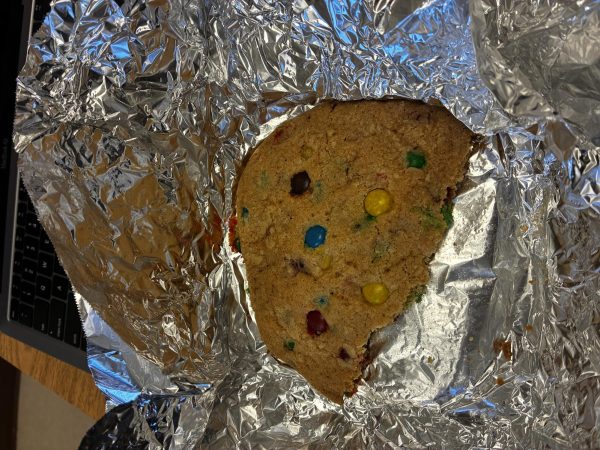
Giron acknowledges the risk involved. “I do think it’s harmless. Students are people at the end of the day, and we don’t know their reasons for selling,” they said. “It’s better they sell snacks than something worse.” Still, they understand the consequences. “It is risky to sell snacks at school simply because of the rules that are enforced. Although I don’t agree with them, I do understand why they are strictly enforced.” Trust, they added, depends on relationships. “It depends on who the seller is and your relationship to them. If I don’t really know them well, then I don’t think I could rely on them.”
Final Thoughts
At Miami High, the student marketplace continues to operate in the space between rules and reality. For some students, it is about hunger and convenience. For others, it is about support, creativity, or financial independence. Whether viewed as harmless side hustles or policy violations, the underground economy reflects students responding to demand, creating opportunity, and navigating boundaries. If food cravings persist and ambition grows, student businesses are very unlikely to disappear anytime soon.