The horror genre is unrivaled, especially when produced with massive amounts of forethought and tied to subjects that an audience can connect to. Horror in itself is so vast, it has subgenres such as psychological horror (E.X.: The Silence of the Lambs), Supernatural Horror (E.X.: The Conjuring Universe), and Gothic Horror (E.X.: Dracula), etc. However, I have a particular favorite.
As a major fan of horror manga (Japanese comics that use different tactics to invoke fear in their audiences through illustration), my all-time favorite author is Junji Ito. One of the most renowned authors in his genre, he’s brought classics to the art form, some that even non-fans or casual manga readers are familiar with, bringing widespread attention to horror manga.
Who is the Master of Horror Manga?
According to the Japan Society of Boston, Junji Ito was born on July 31st, 1963, and was introduced to horror manga at the ages of four to five years old through his two older sisters. His older sisters would read manga from well-renowned horror manga artists, and this interested him so much that it led to him buying his first book, which was titled, “Orochi” by an author named Umezu.
Prior to becoming the “Master of Horror Manga,” Junji Ito pursued a career in dentistry as advised by his aunt and enrolled in school to become a dental technician. However, Ito did not adapt to this profession as it was too demanding and difficult for him, so he began debating changing careers.
Luckily, around this time, a competition named the Kazuo Umezu Award was announced to receive submissions and Junji Ito decided to enter. This submission received an honorable mention in the competition and captivated audiences worldwide—launching Ito into stardom. Ito’s submission for this competition would also become part of one of his most famous works: “Tomie.”
How I Got Lost in the Spiral
I was introduced to Junji Ito in eighth grade through an acquaintance of mine. I was eating my lunch in the school cafeteria, and I noticed a book out of the corner of my eye that piqued my interest. The art was so interesting to me and the dialogue engrossed me. The book’s title was Sensor. I asked the girl reading this book for a recommendation and she told me, “You should read Shiver. Once she told me where I could purchase it, I asked my mom for a book right away. When the book was delivered and I picked it up, I couldn’t put it down. I’d sneak peaks to read during my classes, read throughout the day, and right before bed. Shiver left me wanting more, starting my infatuation for Ito’s work.
Ito’s Most Known Horrors
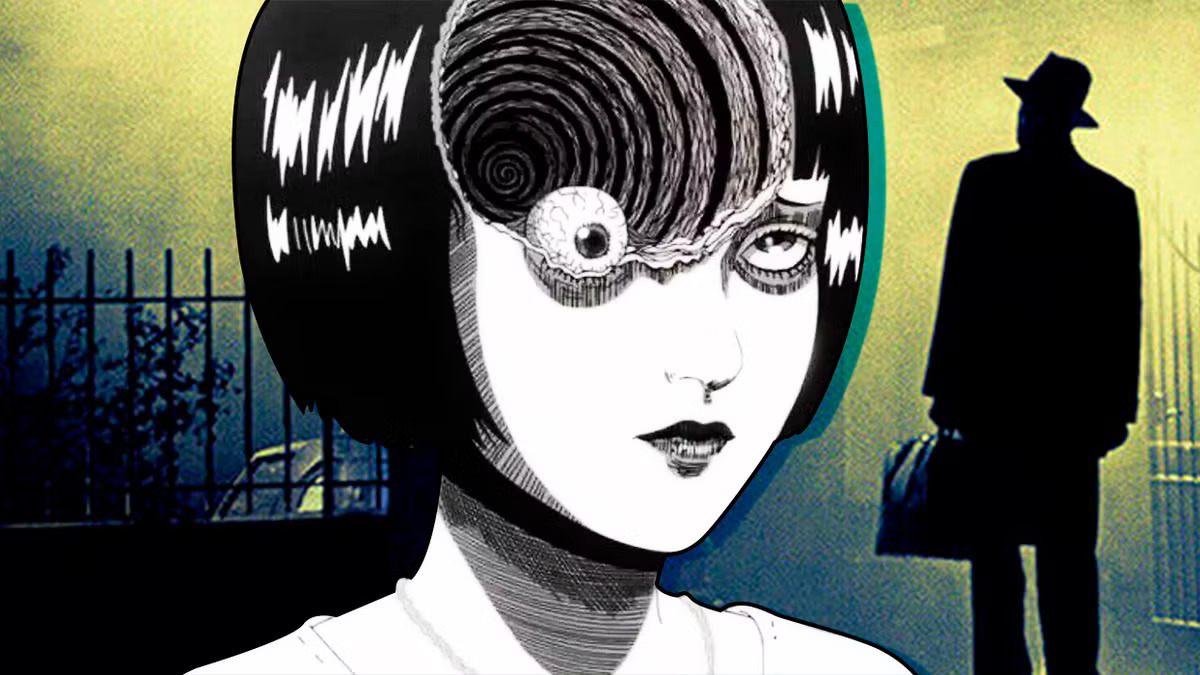
Although all of Junji Ito’s works are impossible to put down, there are some books that are more well-known than others. These titles are: Uzumaki, Tomie, and one of his short story collections, titled Shiver. Uzumaki is Junji Ito’s most well-known book. Uzumaki follows a young girl named Kirie who is stuck in a town infested with spirals. The town is so infected, in fact, that her boyfriend’s father turns into a spiral himself, concealing himself in a wooden tub and forcibly contorting his body into a spiral shape, breaking his limbs and wasting away his muscles.
This is only one of many horrors in Uzumaki, as Kirie’s brother later turns into a snail. The spiral infection in the town, which consisted of literal spiral shapes being formed in nature, such as the clouds or rivers of Uzumaki, festers everything, from humans to inanimate objects to the very formation of the town, changing the paths of the roads and houses to ensure that no one ever escapes.
Tomie is about a single, immortal girl named Tomie Kawakami who is an entity of unmatched beauty who possesses the supernatural ability to drive men into a violent and obsessive madness. This madness inevitably leads her suitors to murder her and dismember her body in fits of jealous rage. However, Tomie has the ability of regeneration. Every severed limb, drop of blood, or organ eventually grows into a brand-new and identical Tomie, each copy possessing her same manipulative personality.
In one of the most chilling instances, Tomie begins to sprout multiple heads from a single body after an experimental procedure, illustrating how her system works like a biological virus. She feeds on the vanity of others, ensuring that no matter how many times she is killed, she will always return to torment the living, eventually threatening to overrun the world with copies of herself.
Shiver is one of Junji Ito’s short story collections. This collection is unique because it includes Ito’s own commentary and sketches, giving readers a glimpse into the bizarre inspirations behind his art. The title story, “Shiver” follows a young boy who discovers a neighbor suffering from a mysterious disease that leaves her body covered in deep holes, a visual so unsettling that a lot of readers leave with a new phobia known as trypophobia: the fear of holes or empty spaces.
This collection also features the infamous story “The Hanging Balloons,” where giant and sentient balloons shaped like the heads of specific citizens float over the city with nooses dangling below. Each balloon is determined to hunt down its human counterpart and hang them in the sky, creating a city of floating corpses that no one can escape. From cursed phonograph records that drive listeners to insanity to fashion models with rows of shark-like teeth and unnatural height, “Shiver” showcases Ito’s ability to turn everyday objects and anxieties into dreadful images.
My Favorite Horrors
I truly love every single one of Junji Ito’s works and I have read every single one of them. However, my favorites are undeniably “Uzumaki,” “Shiver,” “The Liminal Zone 1,” and “Remina.” “Uzumaki” and “Shiver,” although his most famous titles, are two of my favorites because the storylines followed in both books are truly his best material ever written. “Uzumaki” and “Shiver” were both some of the first books I ever consumed from Junji Ito, “Shiver” being my first and “Uzumaki” being my third.
More than Horror Manga
Junji Ito, overall, changed my perspective on life. As a middle schooler, I had no [assion for anything. Junji Ito not only fostered my creative mind but saved me as a human being as his stories lead me to deeper analyze myself and the world around me. His stories allowed me to leave the stressful nature of my own mind and dive into imaginary worlds curated of fantasy and horror. His work also encouraged me to work on my own writing and discover different works of literature, and to this day, reading and writing remain my strongest coping mechanisms and have become tremendous parts of my personality and who I am today. Junji Ito, although nearing the end of his career, will forever remain as the master of horror manga and my most trusted comfort in dark times.